Boardwalk or Beach Path: What Changes Underfoot?
Boardwalk or beach path: compare footing, pace and shore access to choose a coastal route that fits your group, mobility needs and the walk you want.
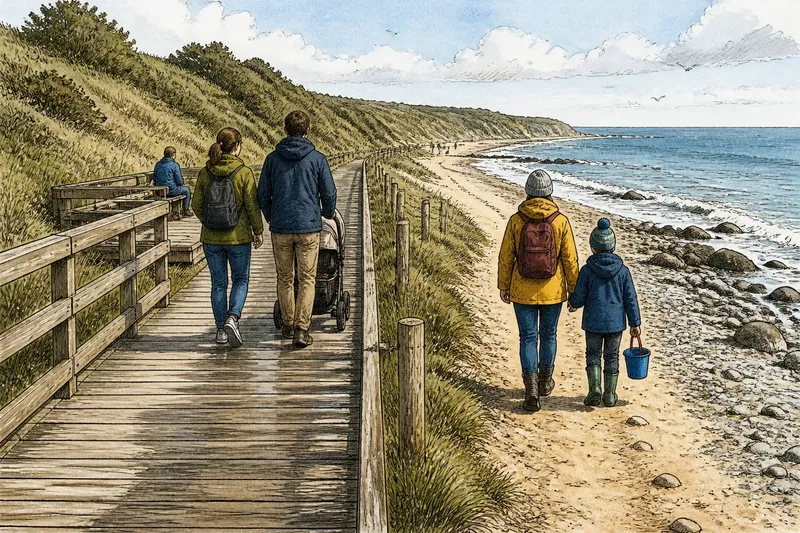
Boardwalk or beach path: which route will give you the walk you actually want? A boardwalk keeps feet on a firm, raised surface; a beach path puts sand, shingle or packed earth directly into the journey. That difference affects pace, comfort and how close the water feels, even when the routes run beside the same stretch of coast.
Neither is the better choice for every walk. Compare the actual surface, how the route meets the shore and what you want to notice along the way.
Seven differences underfoot
- Surface and footing. Boardwalks are commonly made from timber or composite decking. They provide a defined surface, but planks, joints and transitions can feel uneven, and wet or sandy boards may be slippery. A beach path might be compacted earth, loose sand, pebbles or a changing mixture. It can be forgiving in one stretch and tiring or awkward in the next. Practical point: check the route material, not just the view in a photograph.
- Walking pace. A level, continuous boardwalk tends to support a steady rhythm. People can walk alongside one another, pause without leaving the route and keep moving without repeatedly negotiating the surface. Soft sand often slows a walk; shingle shifts beneath a shoe, while a narrow path can require people to make room for one another. Practical point: choose the surface that suits the pace you want.
- Distance from the water. A boardwalk may run behind dunes, above the beach or beside a seawall. Its raised edge can preserve a clear line of sight while keeping the route distinct from the wet shore. A beach path may bring you down to the sand itself, but the water’s edge changes with tide and weather. Practical point: check where the route ends, not only where it begins.
- Access for wheels. A broad boardwalk with gentle transitions can be easier for wheelchairs, pushchairs and mobility aids than loose sand or stones. Yet gaps between boards, cross-slopes, narrow passing points or steps at the beach entrance may complicate a journey. Some beach paths are firm and well graded; others become soft, rutted or steep. Route names alone do not tell you whether the whole trip is workable. Practical point: check the surface and each transition along the route.
- Weather and tide. A raised deck may shed ordinary surface water but can still become slick in rain, spray or windblown sand. On a beach path, rain may soften earth, while a high tide can narrow the usable strip or cover part of the route. Practical point: consult local conditions before setting out.
- Contact with the coast. A boardwalk creates a clear boundary between walking space and beach. That can protect planted dunes and make the route easier to follow, though it may keep feet and hands away from the shore. A path across sand or beside rocks offers more immediate contact, along with uneven ground and changing conditions. Practical point: decide whether you want a view of the shore or a route through it.
- Passing and stopping. A boardwalk may have viewing bays, benches or wider sections where people can pause without blocking others. A narrow beach path can make a stop feel more exposed: walkers may need to move aside, and firm ground may be limited. An open beach can offer room to spread out once you leave the route, if access and conditions allow. Practical point: look for places to pause, not merely places to walk.
Match the walk
Start with the experience you want, then compare the route itself. If you prefer a steady stroll on a continuous surface, a boardwalk may suit you. If you want to walk close to the tide line or feel sand beneath your shoes, a beach path may be a better fit, provided its surface and access points work for your group.
Imagine you are meeting a friend with a pushchair, and the plan is to watch the water rather than walk on it. The boardwalk you first consider has a narrow ramp and no broad place to pause. You check a nearby beach path and find, in this invented situation, that it has firm, packed ground and a broad entrance; that route offers easier stopping, though it brings the group closer to shifting shore conditions. The choice is between more predictable stopping space and closer contact with the beach, not simply between two labels.
For a mixed group, consider who will find the route most demanding. Loose sand can tire some walkers; a hard deck may be uncomfortable for someone who needs frequent rests if seating is scarce. Agree on a pace and check whether there are places to stop without anyone having to leave the group.
Questions about coastal routes?
Is a boardwalk always easier to walk on?
No. A continuous, even deck may be easier than loose sand, but joints, ramps, slopes and wet surfaces can change the experience. Check the full route rather than assuming its name describes every section.
Can a beach path suit a wheelchair?
Some can, especially where the ground is firm and the approach is gentle and continuous. Soft sand, loose shingle and abrupt changes in level can make other paths difficult; check local access information or contact the site operator if details are unclear.
Which route is better for children?
That depends on whether the outing is about a steady walk or direct beach access. A boardwalk can make the route easier to follow, while a beach path offers closer contact with sand and shore life; either may need closer attention near edges, waves or uneven ground.
What should I wear on a beach path?
Choose footwear for the actual surface: secure shoes can help on shifting stones or uneven ground, while sand may be more comfortable in footwear that is easy to clean. Wet ground and windblown grit can alter the footing, so dress for the conditions you expect.
Read the route
Local signs, access notes and the visible surface are more useful than a broad description such as “seafront walk”. Where details depend on site rules or manufacturer guidance for mobility equipment, follow the relevant instructions; local conditions can also change which route is workable.
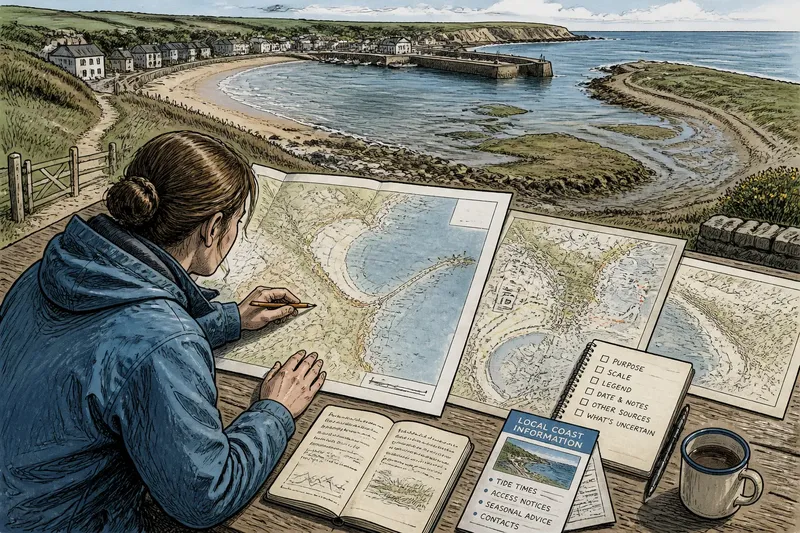
A map can show a line beside the coast without revealing whether it is timber, packed earth or loose shingle. If possible, inspect the entrance and first stretch before committing to a longer walk. Notice ramps, gates, surface changes, passing space and where the route meets the beach.
The best boardwalk or beach path is the one that gives your group the right balance of steady footing, preferred pace and closeness to the water. A little attention to the entrance and surface can spare the walk from becoming an argument with it.