Seaside Promenade History and the Public Waterfront
Seaside promenade history helps you distinguish a walkway from a public waterfront, and decide how local heritage can guide present-day care and access.
What should a promenade be for now: an uninterrupted stroll, a place to sit by the water, or a public setting shaped by the shore’s history? Seaside promenade history offers no single template for today’s waterfront, but it does help distinguish inherited form from present-day purpose.
A town deciding how to care for an old seafront can preserve its historic character without assuming that every old arrangement still serves the public well. The useful question is what the promenade has meant in this particular place, and which parts of that meaning remain visible and usable.
Read the inherited form
Promenades vary in age, design and local purpose. Some were built as formal routes for walking and viewing the coast; others became recognisable through later additions such as shelters, bandstands, gardens or nearby amusements. Treating them as one uniform historical type would flatten the differences that give a particular seafront its character.
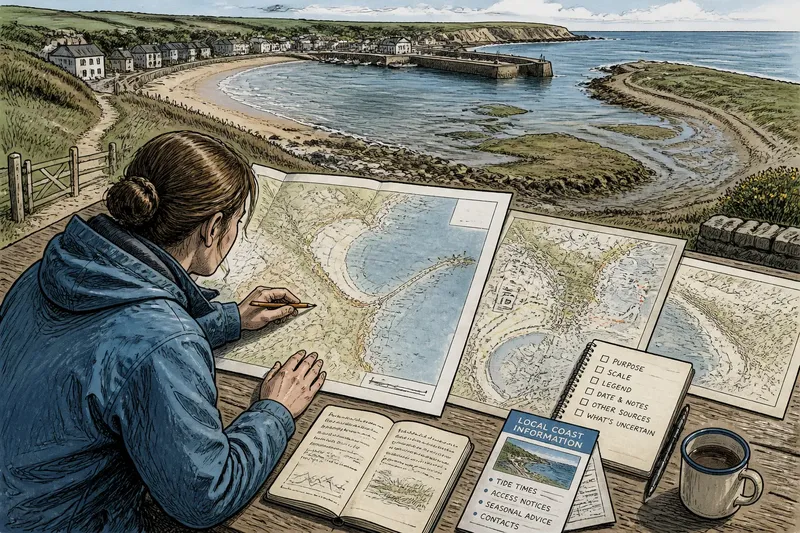
Start with what can be seen and documented locally: the route’s alignment, old maps and photographs, surviving structures, and changes to the shoreline. A council archive, local history group or conservation officer may help identify what is known and what is only assumed. A familiar feature is not automatically an original one; seafronts are revised more often than their stonework suggests.
Historical character can be carried by modest details: a distinctive sea wall, a shelter’s proportions, a particular paving pattern or the relationship between the path and the town behind it. Recording those features before work begins gives residents and decision-makers something more precise to discuss than a general wish to “keep the old feel”.
Separate fabric and use
Preserving historic fabric and supporting public use are related tasks, but they are not identical. A path may retain its familiar line while its surface, entrances or seating become difficult for some people to use. Conversely, a new feature may improve access while making a historic structure harder to understand.
For each proposed change, describe what would be retained, altered or added. Consider the route, the seafront’s distinctive structures, views that help people recognise the place, and the everyday activities already attached to it. Where heritage protection or access rules apply, seek advice from the relevant local authority or a qualified conservation professional before settling on a design.
A useful record is specific: note the feature, its present condition, the public use it supports and the consequence if it changes. If a shelter provides a familiar meeting point but needs repair, for instance, the decision is not simply “preserve or remove”; it may be possible to retain its form while making its entrance and seating more usable.
Choose a fitting approach
The right balance depends on what makes this particular stretch of coast significant and how people use it now. Use these checks to turn a broad preference into a decision:
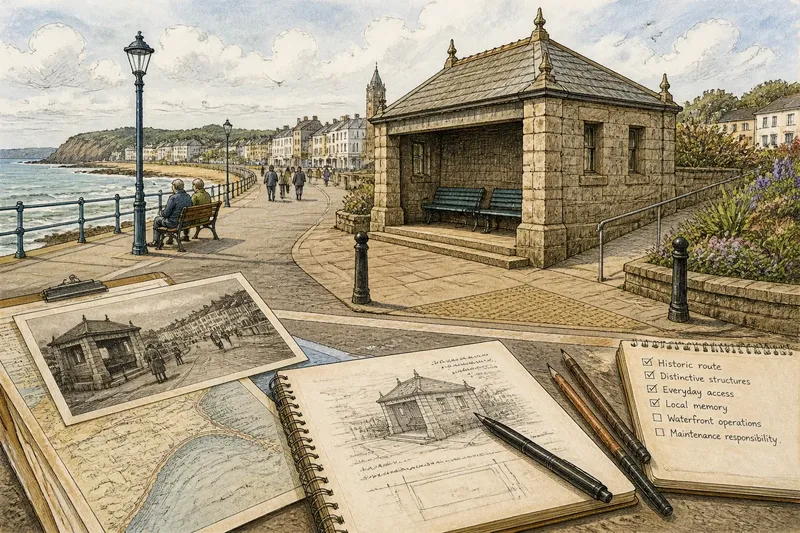
- Historic route: Check whether the existing path follows a documented or locally recognised historic line. If it does and remains usable, retain that alignment; if evidence is uncertain or the route creates an access barrier, document the uncertainty and assess a sensitive alternative with local heritage and access advisers.
- Distinctive structures: Check the condition and local significance of shelters, walls, railings or other original features. If a feature can be repaired, favour repair that retains its legible character; if it is unsafe or beyond practical repair, record the reason and consider a replacement that respects the setting.
- Everyday access: Check the surface, entrances and places to pause with people who have different mobility needs. If the route is usable, preserve that access during works where feasible; if it is not, identify the specific obstacle and seek an improvement compatible with the historic fabric.
- Local memory: Check whether residents associate a feature or location with a recurring community use. If that use is widely recognised, include it in the design brief; if accounts differ, record the differing views rather than presenting one memory as the whole history.
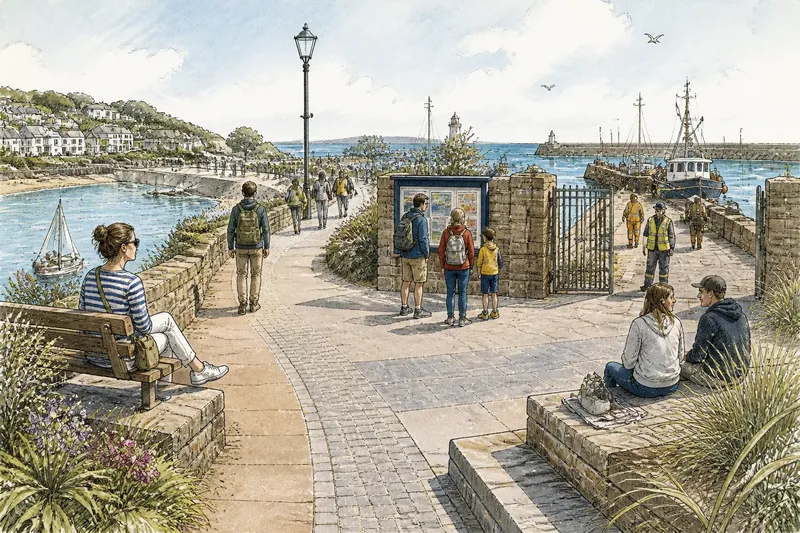
- Waterfront operations: Check whether the site meets working harbour areas, facilities or other managed land. If public movement and operations can coexist, make their boundaries clear; if access would interfere with essential activity, consult the responsible operator and consider a clearly explained alternative route.
- Maintenance responsibility: Check who owns, inspects and maintains each proposed feature. If responsibility is clear and practical, include it in the project plan; if no body accepts the task, revise the proposal before adding an element likely to fall into disrepair.
Say a fictional coastal town has a stone shelter shown in an old local photograph, a worn approach and residents who still use the shelter as a meeting point. The project team first checks the photograph against council records and confirms that the shelter’s form is valued locally; it then asks an access adviser to review the approach and consults the authority responsible for repairs. If the shelter can be repaired, the resulting proposal retains its recognisable structure and improves the approach; if repair is not feasible, the team records that trade-off and develops a replacement that preserves the meeting place without claiming to reproduce the past.
What should history change?
How can I check a promenade’s history?
Begin with local maps, photographs, planning records and conservation documents, then ask a local archive or history group what is known about changes over time. Separate documented facts from recollections and unresolved questions in any project brief.
Does historic character prevent access improvements?
Not necessarily; the design challenge is to identify the barrier and consider an intervention that respects the site’s significant features. Where conservation rules or complex access needs are involved, ask the local authority and a qualified adviser to assess options.
What if local memories conflict?
Record the different accounts and identify which features or uses each person is describing. Do not turn one person’s recollection into a settled historical claim without supporting evidence.
Can new uses belong on an old promenade?
They can, if the proposal respects significant features and leaves public use meaningful. Explain what the new use changes, who manages it and how people can continue to experience the historic place without needing to buy anything or attend an event.
Keep evidence visible
Local consultation is more useful when people can respond to concrete information. Share a simple plan showing what will stay, what may change and where access or maintenance questions remain. Invite residents, waterfront users, local historians and relevant operators to correct errors and describe uses that a drawing cannot show.
Keep a short record of the evidence behind each design choice: the feature concerned, the source or observation, the options considered and the reason for the decision. This makes later disagreements easier to handle, and helps prevent a convenient story about the past from becoming the project’s only justification.
Seaside promenade history is most useful when it helps a town recognise what is distinctive without freezing the waterfront in a single imagined moment. Keep the features that carry local meaning, make changes legible, and state plainly where the evidence is incomplete. A public place can inherit its character and still answer to the people who use it now.